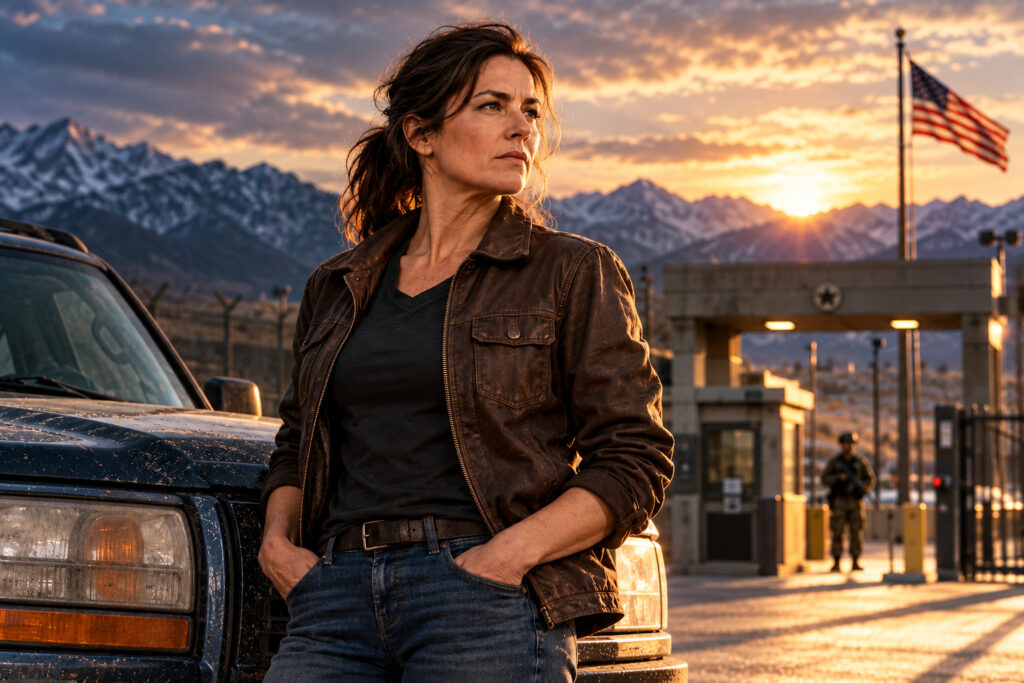
The next forty minutes were spent reconstructing events from systems that hadn’t been connected to ARGUS. Perimeter cameras had recorded the truck approaching the installation, while an older communications network provided intermittent contact with the reconnaissance patrol. The patrol had withdrawn to a secure position and reported no unusual activity, although its commander confirmed that the eastern ridge was outside the area they’d been instructed to search.
Mara worked beside a young specialist named Luis Ortega, who had been responsible for monitoring the thermal feeds before the failure. He was intelligent, methodical and sufficiently interested in what had gone wrong to overlook the fact that she hadn’t touched military surveillance equipment in nearly a decade.
“Can we retrieve the raw images from the drone?” she asked.
“Possibly. The aircraft stores a local copy, but we can’t download it until we recover the control link.”
“What about the images captured before the connection failed?”
Ortega opened a diagnostic folder and began searching through the available files.
“Those should still be here, although the timestamps might be unreliable.”
“Why?”
“The system clock was reset during the failure. It looks like somebody pushed an unauthorized configuration update.”
Mara pulled a chair beside him.
“Can you show me the sequence of commands?”
He hesitated. “Some of this is classified.”
“Then ask the colonel whether I’m allowed to see it.”
Ortega glanced toward Mercer, who was speaking to the installation security officer, and received a nod of approval.
The command log appeared on the screen. Mara wasn’t a software engineer, and she had no intention of pretending otherwise, but she understood enough about surveillance operations to recognize the significance of what Ortega was showing her. The system hadn’t simply failed. It had received instructions to change its assessment priorities, disregard certain sensor readings and disconnect from its external feeds.
“Whoever did this knew how ARGUS was configured,” Ortega said quietly.
“Could someone have accessed it remotely?”
“Not without credentials, and even then they’d need to know which commands to send. This wasn’t somebody guessing passwords.”
He scrolled farther down the log, then stopped.
“That’s strange.”
“What?”
“The update originated from a maintenance account belonging to the contractor’s senior systems engineer.”
“Can you identify him?”
Ortega checked the account information.
“Martin Sloane. He was here yesterday to supervise the final calibration.”
Mara wrote the name in her notebook.
“Is he still on the installation?”
“According to the personnel roster, he left at six this morning.”
“Before the evaluation began.”
“Yes, ma’am.”
Mara studied the command sequence again. Whoever had manipulated ARGUS had made the western hillside appear to be the most likely location of the simulated enemy force, while reducing the probability assigned to the eastern ridge. The alterations were subtle enough that the operators had accepted the results without question.
It reminded her unpleasantly of the intelligence summaries she’d received before Kandar, when aerial images showing activity near the village had been dismissed as irrelevant because they contradicted the official assessment.
“Can you tell when the system was first altered?”
Ortega compared several entries.
“Yesterday evening, shortly after the calibration. But the command that shut everything down was triggered today, just after the drone camera moved toward Sector East.”
Mara leaned back.
“So whoever set this up knew we’d be looking at the wrong hillside, and when we looked at the right one, they shut down the system.”
“That’s what it looks like.”
She considered the implication. The person beneath the camouflage had either been monitoring their investigation or working with someone who had access to the observation center. Neither possibility was particularly comforting.
“Can you save a copy of those logs somewhere that isn’t connected to the network?”
Ortega nodded.
“Already done.”
Mara smiled at him.
“You’re going to do well, Specialist.”
He looked pleased. “Thank you, ma’am.”
“Although you might want to stop letting contractors connect things that aren’t supposed to be connected.”
His smile faded.
“Yes, ma’am.”