Six weeks after the evaluation, Mara received a letter from the Department of the Army.
Unlike the invitation that had brought her to Fort Calder, this one was direct and remarkably brief. Following a preliminary review of the Kandar investigation, the Army had withdrawn the adverse findings against her and formally acknowledged that her operational assessment had been supported by the available evidence.
The letter included an apology.
Mara read it twice at her kitchen table, then placed it beside her tea and looked out toward the mountains.
For nine years, she’d imagined how it might feel to have her name cleared. She’d expected satisfaction, perhaps even triumph, but what she felt was quieter and more complicated. The apology couldn’t bring back the men who’d died, and it couldn’t return the years she’d spent wondering whether she’d somehow failed them despite knowing she’d done everything she could.
Nevertheless, it mattered.
She folded the letter carefully and placed it in the drawer where she kept the few things she couldn’t bear to throw away.
A truck pulled into the yard outside, followed by the familiar sound of someone shutting a door with considerably more force than necessary.
Mara glanced through the window and saw Captain Rourke climbing out of a government vehicle.
He was wearing civilian clothes, which made him look younger and considerably less intimidating than he’d appeared at Fort Calder. He stood beside the truck for a moment, apparently uncertain whether he was supposed to approach the house or the workshop.
Mara opened the back door.
“Captain, if you’ve come to arrest me for insulting military coffee, you’ll have to take a number.”
Rourke smiled.
“Actually, I’m here on behalf of Colonel Mercer.”
“That sounds ominous.”
“He asked me to deliver something personally.”
Rourke handed her a small envelope containing an invitation to participate in a new independent review panel examining the use of automated battlefield surveillance systems.
Mara read the letter, then looked at him.
“You’re joking.”
“No, ma’am.”
“Does the Army have any idea how much paperwork is involved in repairing a combine harvester? Because I assure you, it’s considerably less than this.”
Rourke laughed.
“Colonel Mercer said you’d probably say something like that.”
“Daniel knows me too well.”
“He also said you might be interested in helping prevent another Kandar.”
Mara looked down at the invitation again. The proposal was sensible, and the review panel appeared to have been given genuine authority to question how surveillance systems were tested and deployed. She could imagine several ways her experience might be useful, although the prospect of attending regular meetings filled her with a familiar sense of dread.
“I’ll think about it,” she said.
Rourke nodded, apparently satisfied.
As he turned to leave, Mara called after him.
“Captain?”
He stopped.
“How’s ARGUS?”
“Being redesigned. The contractors are having a rather unpleasant time explaining why their supposedly independent systems weren’t independent.”
“Good. Nothing improves engineering quite like embarrassment.”
Rourke grinned.
“There’s something else I wanted to say.”
Mara waited.
“I was wrong about you at Fort Calder. I judged you before I knew anything about your experience, and I behaved like an idiot.”
She considered him for a moment.
“Yes, you did.”
He laughed awkwardly.
“I suppose I deserved that.”
“You did. But you also listened when it mattered, and you did your job properly once things went wrong. That’s worth considerably more than knowing how to make a good first impression.”
Rourke seemed genuinely relieved.
“Thank you, ma’am.”
“Now go home, Captain. You’re making my neighbors nervous.”
He climbed into his vehicle, still smiling, and drove away.
Mara watched him disappear down the gravel road before returning to the kitchen. She picked up the invitation, considered it for another moment and placed it beside the letter clearing her name.
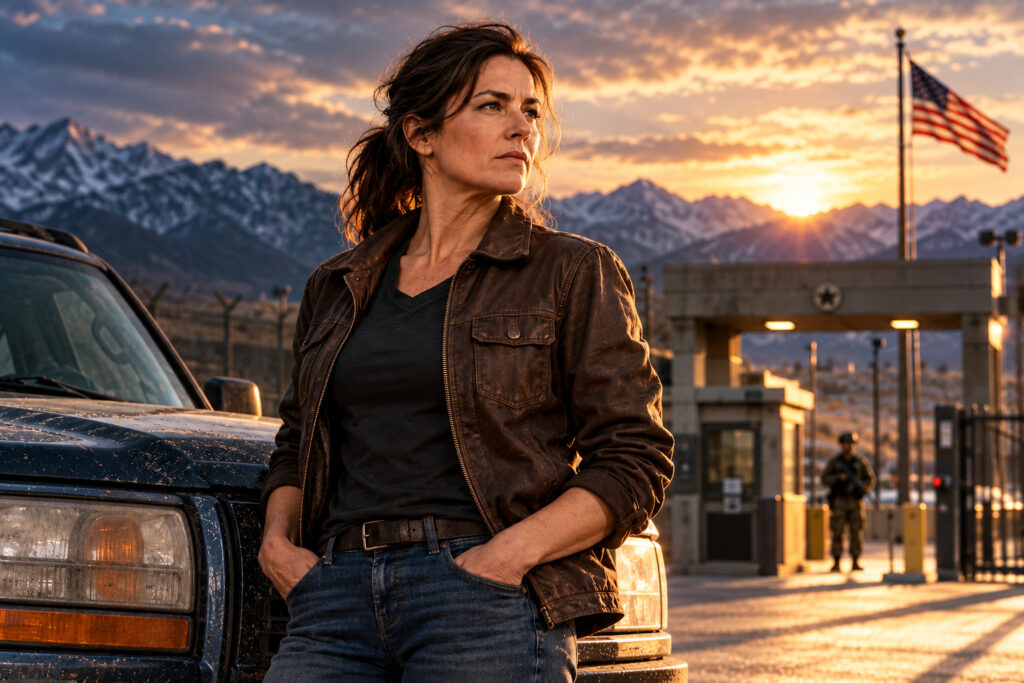
Outside, the mountains were beginning to turn gold in the late afternoon sunlight, and somewhere in the workshop a customer had left a tractor that refused to start.
For the first time in years, Mara found herself looking forward to the possibility of returning to military work, although she had no intention of giving up her workshop entirely. There was something deeply satisfying about repairing a machine that had been declared beyond saving, particularly when the person who’d made that declaration was standing nearby.
Her phone vibrated.
A message from Jamie appeared on the screen.
My daughter wants to meet you. Apparently, she’s decided anyone who can frighten a colonel must be interesting.
Mara smiled and typed a reply.
Tell her I only frighten the ones who deserve it.
A moment later, another message arrived.
She says that’s even better.
Mara laughed, put the phone down and reached for her jacket. The tractor wasn’t going to repair itself, and she had a feeling that whatever happened next, life was about to become considerably more interesting.