Chapter Two: The Wrong Hillside
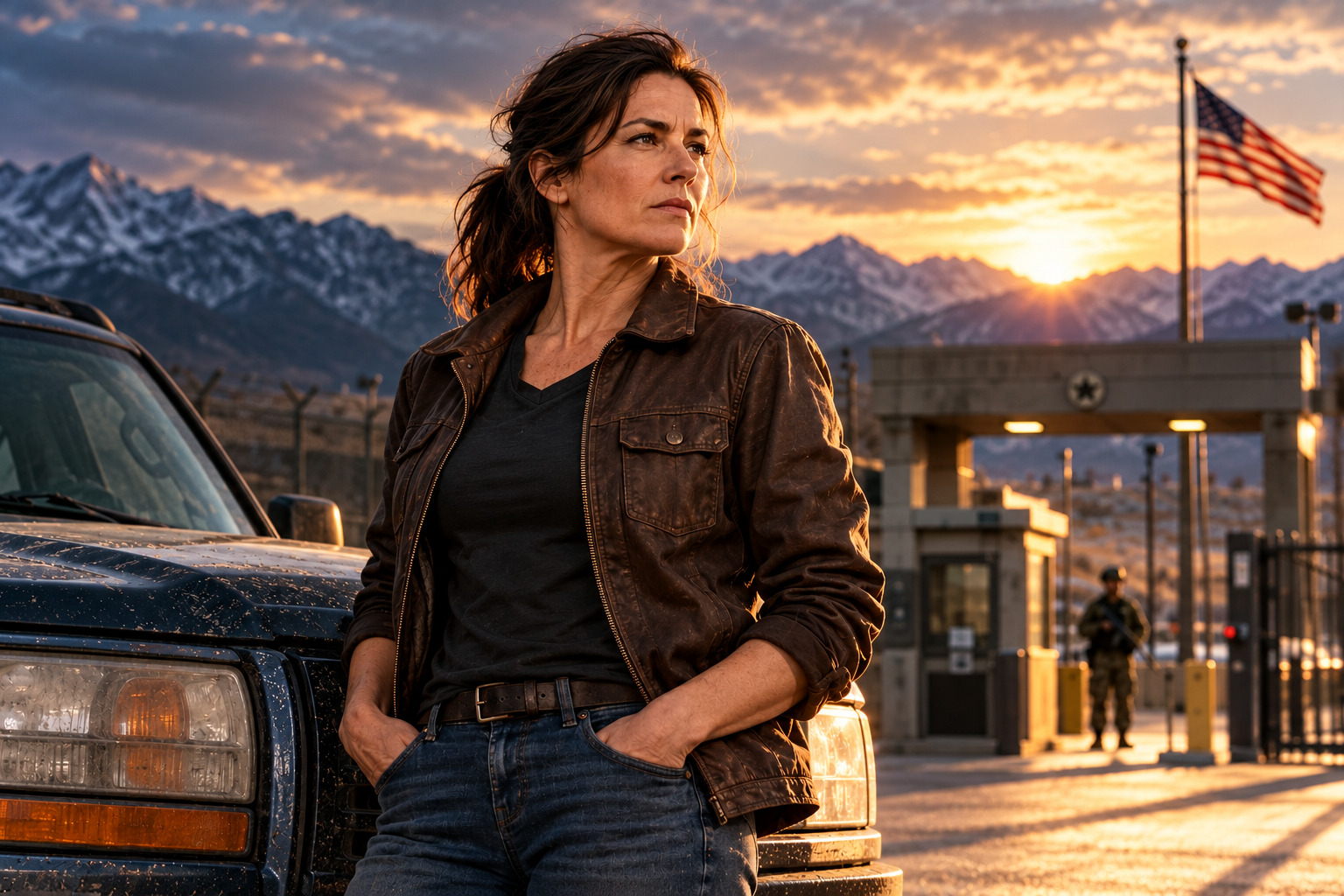
For several seconds after the guard finished reading the identification number, Mara remained perfectly still, listening to the confused conversation developing around her. Colonel Mercer was demanding clarification from perimeter security, Captain Rourke was attempting to establish why the surveillance network had failed, and somewhere behind them a technician was explaining that the backup system had stopped responding at precisely the same moment as ARGUS.
Under ordinary circumstances, Mara would have found the simultaneous failure of two supposedly independent systems interesting. At that moment, however, she was having considerable difficulty thinking about anything except the number painted on the side of a truck that should have been lying in pieces on the other side of the world.
She reached for the handset in Mercer’s hand.
“Ask them whether the truck has a replacement passenger-side door.”
Mercer stared at her. “What?”
“The passenger door. Ask whether it’s a different shade of green from the rest of the vehicle.”
He relayed the question, receiving a puzzled acknowledgment from the guard. While they waited, Mara walked to the nearest window and looked toward the eastern service road, although the entrance itself was hidden behind a low ridge.
The truck had been old even when she’d first encountered it in Afghanistan. Its engine rattled badly at low speeds, the heater worked only when the weather was warm, and the passenger door had been replaced after an accident involving a reversing fuel tanker. The replacement panel had come from another vehicle, and despite several enthusiastic attempts by the maintenance crew to repaint it, the color had never quite matched.
She remembered sitting in that truck beside Corporal Jamie Haskell, listening to him complain about the state of military transport while he showed her photographs of his wife and their newborn daughter. He’d been twenty-four years old and had spent most of the journey worrying that his little girl wouldn’t recognize him when he finally returned home.
Jamie had died less than two hours later.
“Observation, Gate Control,” the radio crackled. “We have visual confirmation. Passenger-side door is a lighter shade than the body. How did you know that?”
Mara closed her eyes briefly.
Mercer lowered the handset.
“That’s impossible.”
“Apparently not.”
“That vehicle was destroyed.”
“That’s what the report said.”
Their eyes met, and for a moment neither spoke. Mara could see that Mercer was remembering the same operation, although she doubted their memories agreed on many of the details.
Captain Rourke approached them, his earlier irritation replaced by the focused expression of an officer who understood that the situation had moved well beyond a routine technical failure.
“Colonel, perimeter security wants authorization to stop the vehicle. The driver isn’t responding, but he hasn’t attempted to breach the gate.”
“Keep the barriers closed and establish a security cordon,” Mercer replied. “Nobody approaches the truck until we’ve assessed it. Have the installation security officer take command at the gate.”
Rourke acknowledged the order and turned away, already speaking into his radio.
Mara was relieved to see that he hadn’t wasted time arguing. Whatever his shortcomings as a conversationalist, the captain appeared capable of recognizing an emergency when one presented itself.
“Daniel, I need to know who arranged this evaluation.”
Mercer glanced toward the operations team. “I did.”
“Who suggested inviting me?”
He hesitated, and Mara felt an unpleasant certainty settle in her stomach.
“Daniel.”
“Three weeks ago, I received a packet of documents through an internal review channel. They concerned the Kandar operation.”
She hadn’t heard anyone use that name in years. The official investigation had referred to the incident by its operational designation, but the soldiers involved had always called it Kandar, after the village they were supposed to secure.
“What kind of documents?”
“Maintenance records, intelligence summaries and several photographs that weren’t included in the original investigation. Whoever sent them claimed that the operation had been compromised before our team arrived.”
Mara studied him carefully. “And you believed them?”
“I believed there were questions worth asking.”
“That’s a considerable improvement on your position nine years ago.”
Mercer accepted the remark without protest.
“I deserved that.”
“You deserved considerably worse, but we’re rather busy.”
Despite everything, he gave a brief, reluctant smile.
“I asked for an independent technical review, and two days later this evaluation was scheduled. I put your name forward myself, but the approval came back through Pike’s office so quickly that I should have questioned it. I thought I was finally being given permission to do the right thing.”
Mara considered the sequence. Someone had provided Mercer with information capable of reopening an investigation, then arranged for her to attend a military exercise involving experimental surveillance equipment. The arrival of the truck made coincidence an increasingly difficult explanation.
“Who approved my invitation?”
“Brigadier General Warren Pike signed off on the evaluation, although my office selected the observers. I asked for you specifically, Mara. I doubt Pike realized the request had anything to do with Kandar; the paperwork described a routine outside assessment.”
Mara felt her expression change before she could prevent it.
Mercer noticed.
“You remember him.”
“Oh, I remember General Pike.”
Nine years earlier, Pike had been the senior intelligence officer responsible for approving the information used during the Kandar operation. He’d also chaired the preliminary inquiry that concluded Mara had misinterpreted the available evidence and failed to communicate her concerns through the proper channels.
The finding had been convenient for everyone except the dead men and the woman who had tried to warn them.
Mara had never been able to prove that Pike deliberately concealed information. She’d only known that certain photographs disappeared, witness statements changed between drafts, and the final report described conversations that had never taken place.
“Where is he now?” she asked.
“Washington. He was due to join us by secure video conference this afternoon.”
“Of course he was.”
Mercer frowned. “What are you thinking?”
“That somebody has spent an extraordinary amount of effort getting the three of us involved in the same exercise. I’d like to know whether General Pike is expecting a reunion or arranging one.”
Before Mercer could answer, Rourke returned with an update from the eastern gate. The truck had stopped approximately fifty yards from the outer barrier, and the driver appeared to have abandoned it. Security personnel had spotted a figure moving away through the drainage ditch, but the individual had disappeared behind a maintenance building before they could establish an identity.
“There’s something else, sir,” Rourke added. “The truck’s registration plates are current, but the identification number painted on the body belongs to a vehicle removed from the Army inventory nine years ago. We’re checking whether somebody has copied the markings.”
“Assume the vehicle may have been deliberately staged,” Mercer instructed. “Keep personnel clear until the security team has assessed it.”
Mara looked toward the blank surveillance monitors.
“Captain, how long before we can restore the camera feeds?”
“Our technicians are working on it. The system isn’t simply offline. Something has corrupted the connection between the central processor and the external sensors.”
“Can you isolate the affected network?”
“We already have. The problem is that the backup interface was connected to the same maintenance server during yesterday’s software update.”
Mara raised an eyebrow. “Two independent systems sharing the same maintenance server?”
Rourke looked uncomfortable.
“That wasn’t the original design.”
“I should hope not.”
“The contractor requested temporary access for diagnostic testing. The connection was supposed to be removed before today’s exercise.”
“Was it?”
“We’re checking.”
Mara resisted the temptation to make another remark. Rourke was clearly embarrassed, but he was also taking the problem seriously, which mattered more than winning an argument.
“Then perhaps we should stop worrying about what ARGUS thinks it can see and find out what we can verify ourselves.”
Rourke studied her for a moment before nodding.
“Agreed.”