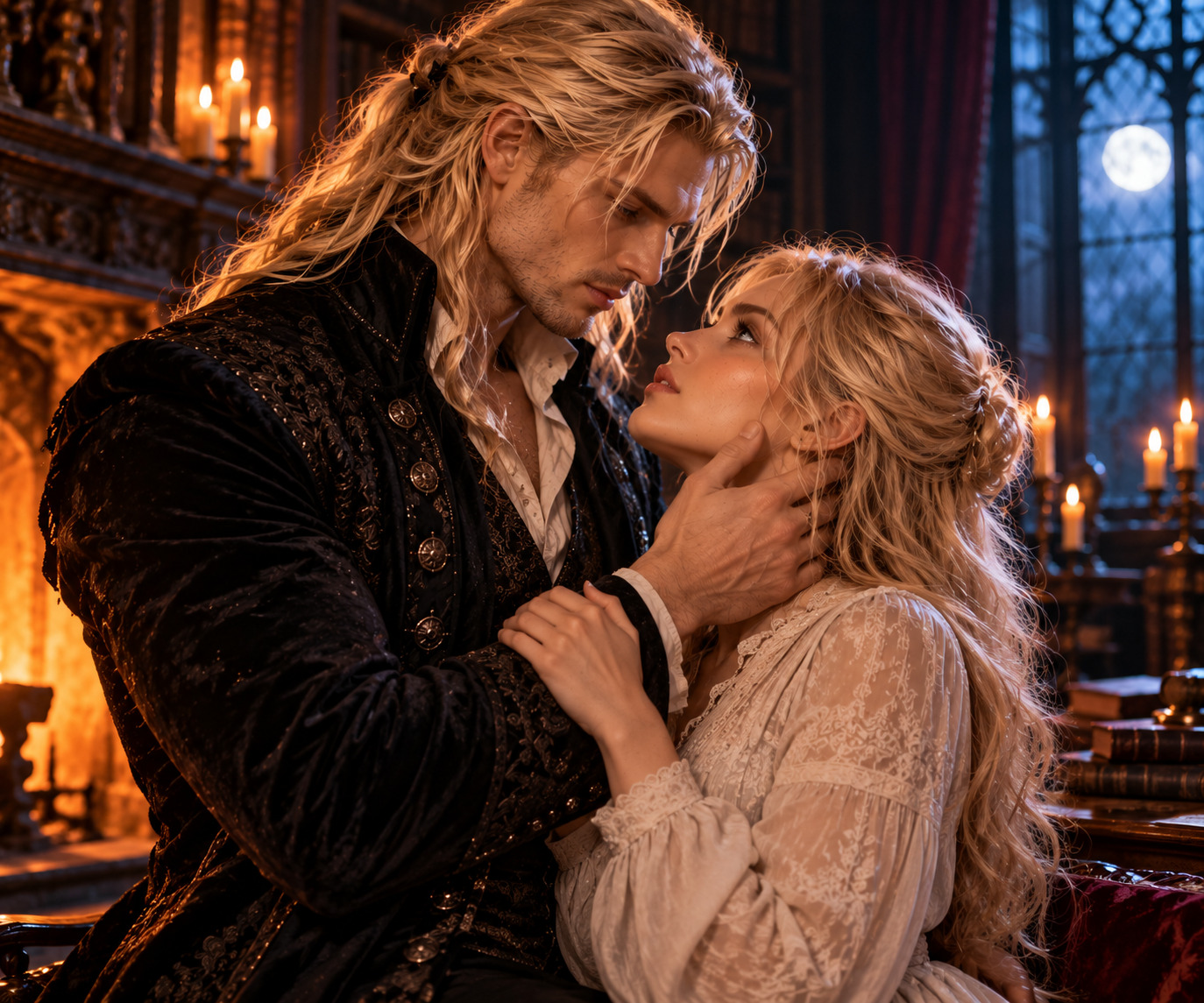

They married in midsummer, in the garden behind The Drunken Bishop. The royal advisers had prepared a ceremony involving a cathedral, twelve heralds, and a procession that would have taken half the morning. Nell thanked them politely and chose the garden instead. The villagers brought flowers, the Black Guard stood alongside farmers and bakers, and the palace cook produced a wedding cake large enough to feed a small army.
Bram arrived in ceremonial black armor, looking as though he intended to conquer the neighboring kingdom before the reception. Nell took one look at him and shook her head.
“Absolutely not. You’re getting married, not invading somewhere.”
“It’s traditional.”
“So is putting the bride first. Go and change.”
He did, returning in a simple dark suit that made Nell smile in a way no armor ever had. Garrick muttered something about nine centuries of royal precedent, but even he fell silent when Nell walked into the garden.
Bram had prepared several clever remarks for the occasion. He forgot all of them. Nell, who had never seen him speechless for more than a few seconds, looked delighted.
Their vows were simple. Bram promised to love her honestly, listen when she disagreed with him, and never again use royal magic to repair a fence. Nell promised to love him, challenge him, and remind him when he was being insufferable. When she added that she might occasionally allow him the last word, the guests laughed, and Bram wisely refrained from asking whether she meant it.
They kissed beneath the summer stars. From the hills beyond Briar’s End came the long, answering voices of the wolves, rising together in a song that rolled across the valley. Admiral Pudding, wearing a purple bow tie, slept through most of it.
A year later, Bram sat outside The Drunken Bishop with his wife beside him and the old dog sprawled beneath their table. The village square was busy with children, market stalls, and neighbors arguing cheerfully over the price of apples. Bram had spent the morning hearing petitions and the afternoon washing glasses, and he was not entirely certain which occupation was more exhausting.
“Happy?” Nell asked, resting her head against his shoulder.
He looked at the familiar courtyard, at the tavern where she had first offered him a room, and at the ring glinting on her hand. The grief he carried had not vanished, nor had the responsibilities of his crown. But neither felt like a sentence he had to serve alone.
“Very,” he said. “Although I think the sausages have become smaller.”
“Bram.”
“And the ale could be colder.”
“Keep talking and you can fetch it yourself.”
He laughed and kissed the top of her head. Once, he had owned seventeen castles and felt unwelcome in every one. Now he knew exactly where he belonged, even if the woman beside him insisted on making him work for his supper.
Beneath the table, Admiral Pudding opened one eye, judged the moment suitable, and stole the last sausage from Bram’s plate.
“That’s it,” Bram declared. “I’m putting him on trial.”
Nell laughed so hard she had to lean against him. Bram watched her, smiling, and decided that a life filled with stolen sausages, terrible curtains, and a woman who refused to bow was more than enough for any king.
THE END